


12 things I loved about Brussels
May 17, 2026
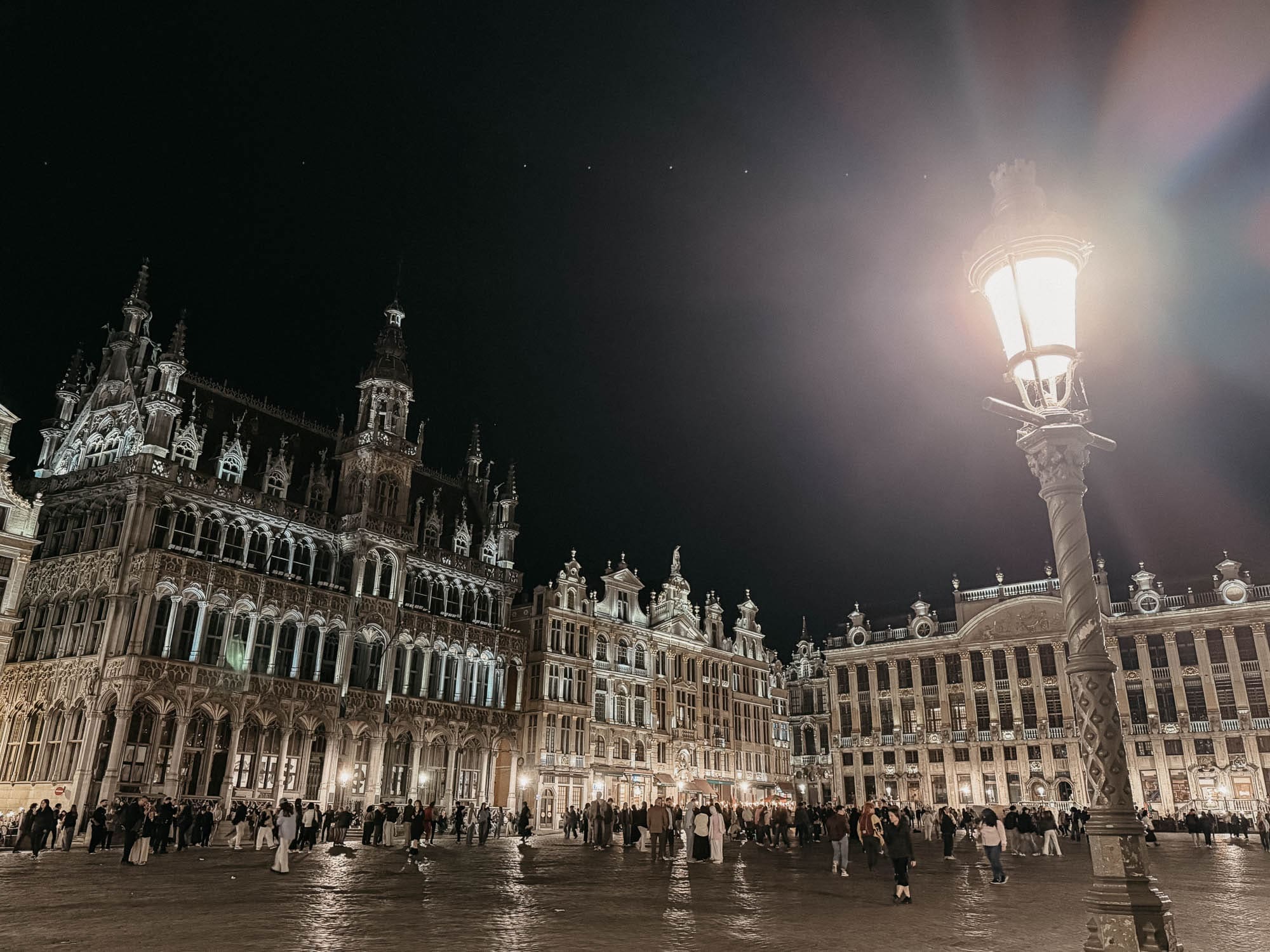
I recently spent 4 weeks in Brussels, and what an absolute delight it was.
When I arrived, I literally had zero expectations – I hadn’t done any research whatsoever, and the only thing I really knew about the city was that it was the seat of the European Union. In fact, this was my first ever visit to Belgium, and if I’m completely honest, I didn’t even know much about the country itself.
Sidenote – as someone who has been living a full-time travel lifestyle for the past 4+ years (while living for FREE), this is my favorite way to travel – to turn up without any expectations and let a place reveal itself to me. This is such a far cry from my old self, a productivity maximalist in corporate jobs who needed to manage and optimise every minute of her trips and holidays, and planned everything in meticulous detail. I no longer recognise this person, but I send her all my love because she truly lived for the holidays (and weekends) as an escape from being trapped in 9 to 5 jobs that were slowly eating away her soul.
During my stay, as people found out I was visiting Brussels, I received a few comments saying people had heard that there wasn’t much to see in Brussels, or that the city was boring.
I completely disagree with this. But I’m also not your average traveller 😉
My personal view is that if you approach a place with curiosity, a sense of wonder and actual presence – the way I do – rather than rushing around, trying to tick off as many sights and must-dos as possible, you’ll quickly find that almost every place has a story to tell, beauty to uncover and way more to it than meets the eye.
When it comes to Brussels though, you don’t even have to search hard for it… most of its charm lies in plain sight.
So here is a list of 12 things that Brussels revealed to me over the course of my stay, and that I loved about this city. Perhaps this list inspires you to go and make up your own mind about Brussels, or even more so – try out this way of travel for yourself and see what it feels like.
Without further ado, here are my Brussels highlights (in no particular order):
1. The Grand Place
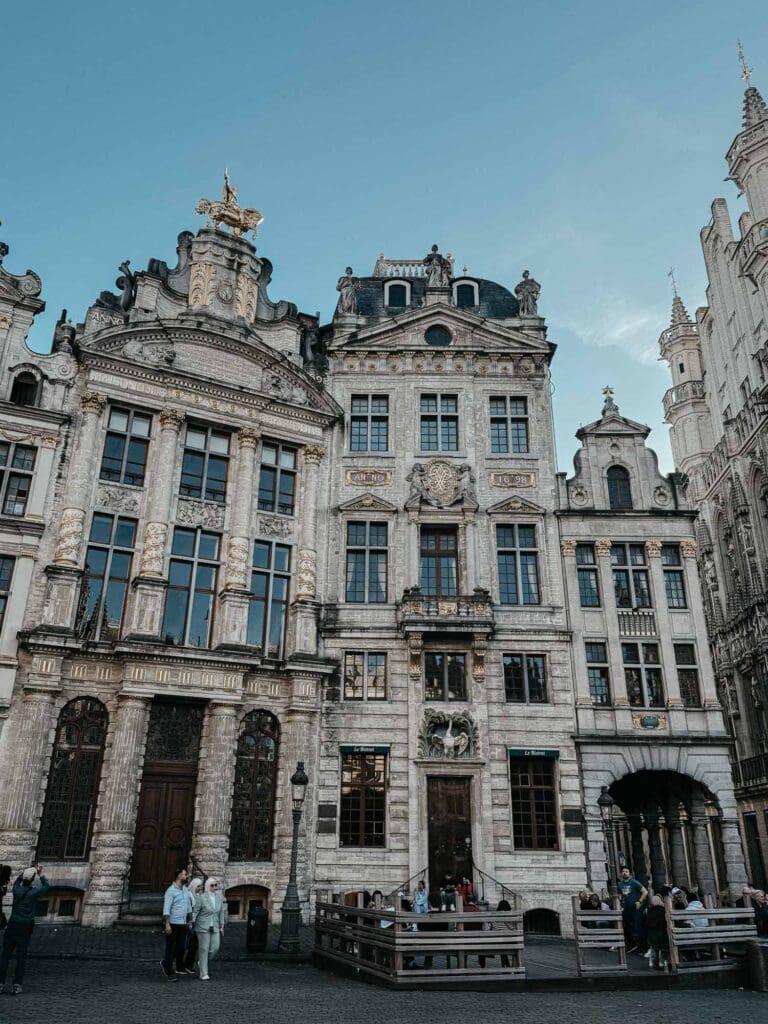
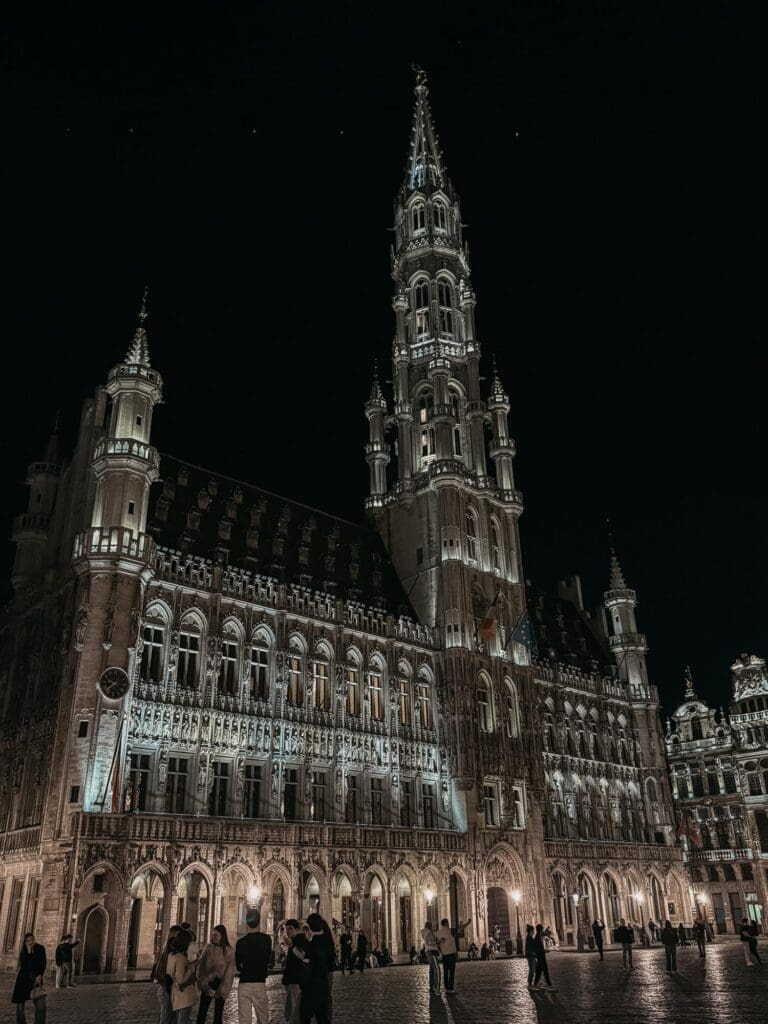
Wow. Just wow. This was my reaction when I stepped onto the ridiculously pretty, historic square in the heart of the city. I’ve seen a lot of beautiful places over the years but Grand Place is now firmly placed among my absolute favorites.
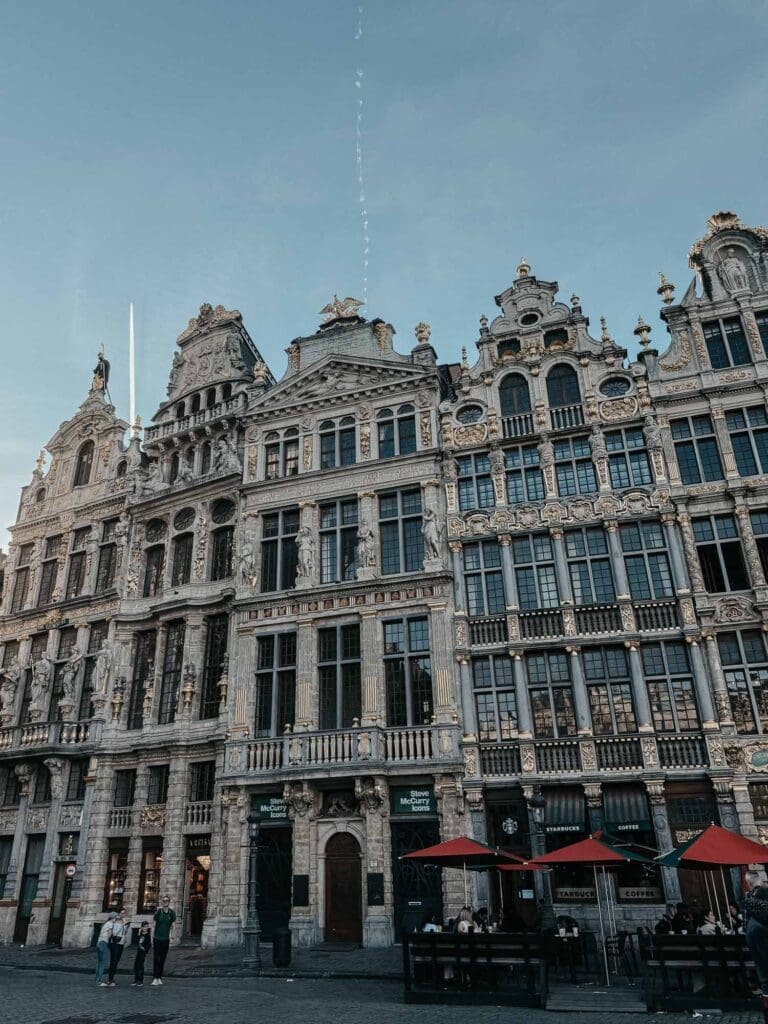
Being obsessed with historic architecture (especially gothic and baroque), it felt like I was stepping into a candy store. Surrounded by incredibly lavish, detailed and old guild houses on all sides, the square feels like an extraordinary demonstration of wealth, taste and historic drama.
Going back all the way to the 17th century when Brussels was a wealthy and strategically important trading city, the powerful guilds – representing bakers, brewers, boatmen and other trades – all competed to showcase their status through increasingly elaborate buildings.
Much of the square had actually been destroyed during a French bombardment in 1695, before being rebuilt in an almost theatrical display of baroque ornamentation, gilded details and symbolism. And the result is a square that feels almost unreal in its beauty – less like a normal city centre and more like a stage that was designed to impress merchants, visitors and rival powers alike.
I highly recommend going at least once during the day and once during the night, because the look and feel of the square is so different – yet stunning any time of the day.
(Looking at these masterpieces brought back some of the thoughts I had when I visited the incredible gothic masterpiece York Minster in York in Northern England)
2. Mixed cultural heritage
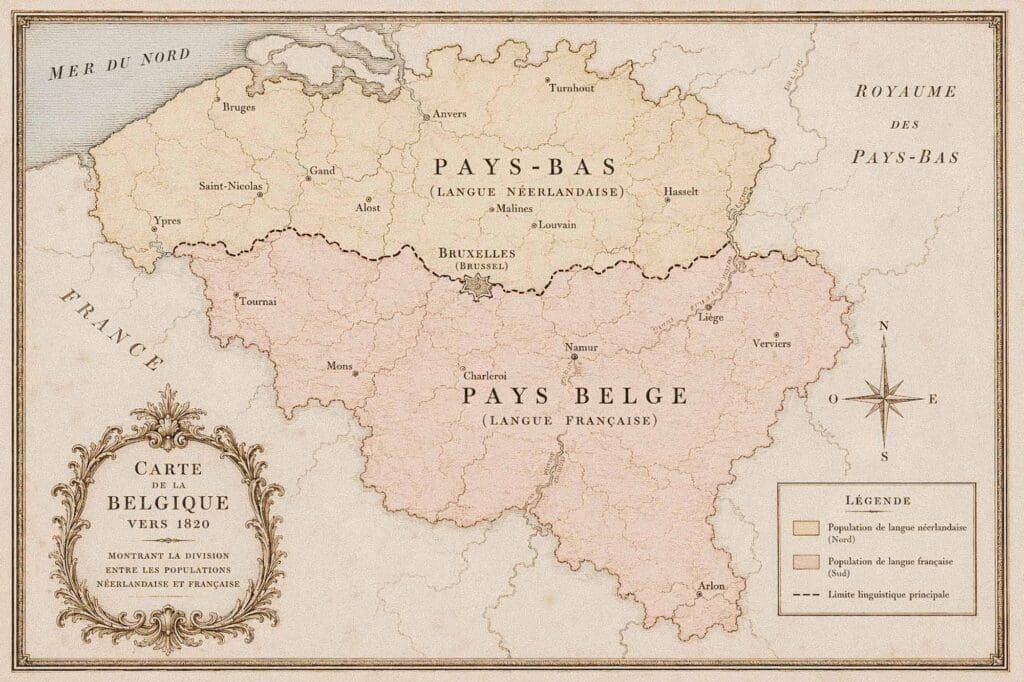
I have to admit, I was not aware that Belgium is, in fact, such a young country, and was only established 200 (!) years ago. Because the country is located on lands that have been inhabited for centuries, somehow I thought Belgium was as old as neighbouring France and the Netherlands.
However, turns out that Belgium as a unified state only came into existence in 1830 after breaking away from the United Kingdom of the Netherlands, when the southern provinces (largely Catholic and French-speaking elites, alongside Dutch-speaking regions in the north) rebelled against political and cultural dominance from the north of the Kingdom. What followed was the creation of a new country that quite literally sits between worlds: linguistically, culturally and historically.
To this day, Belgium is divided mainly into Dutch-speaking Flanders region in the north and French-speaking Wallonia region in the south, with Brussels as a bilingual and highly international enclave in the middle. And this layered history is what makes Belgium feel so unique – rather than having a single dominant identity, it brings together two neighbouring European cultures that are often quite distinct, and somehow, holds them in constant balance.
Because I personally love both the French and the Dutch cultures – for different reasons, of course – I find this mix very fascinating and really cool. It gives the country, and Brussels as its capital, so much character.
3. Café culture
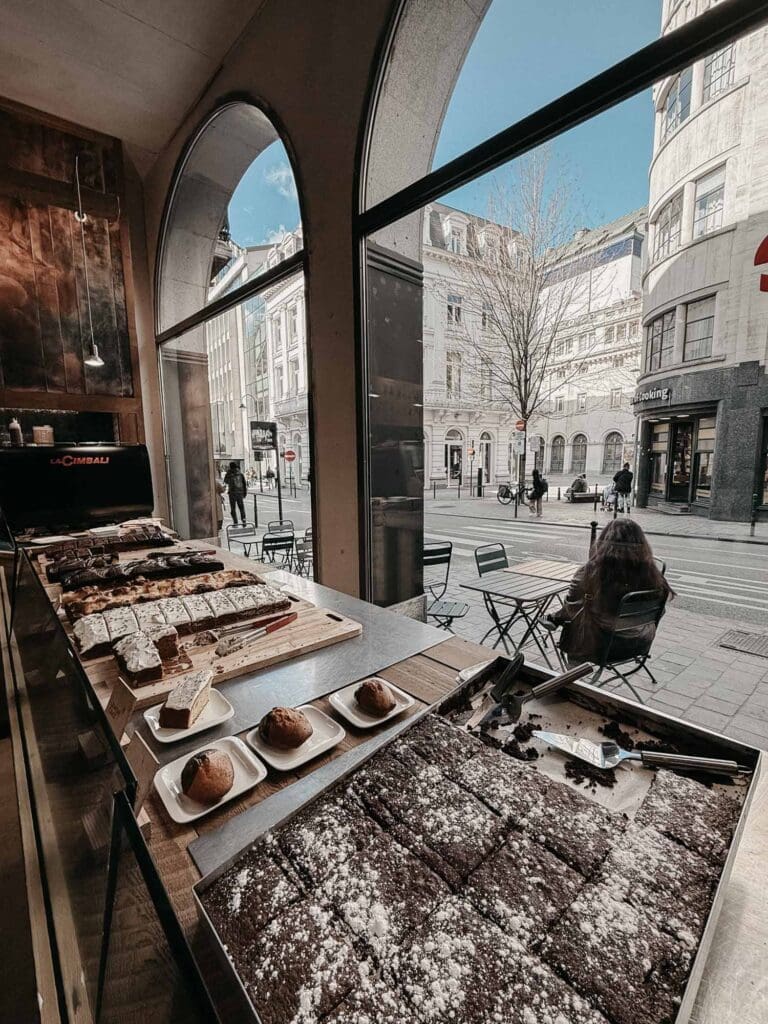
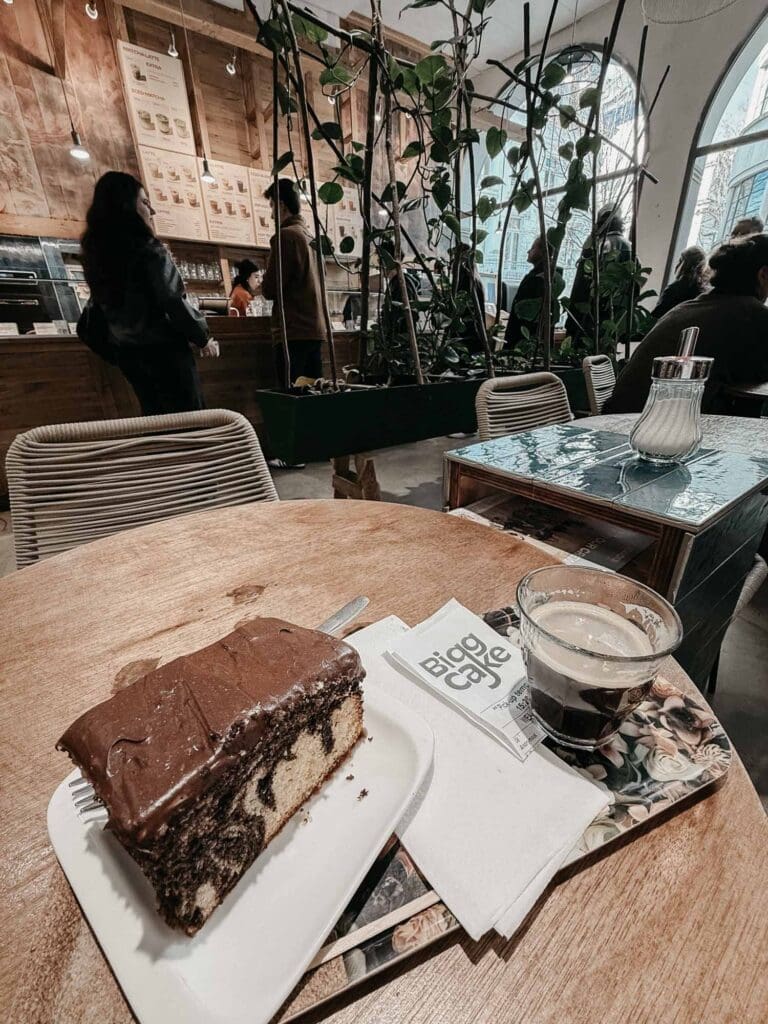
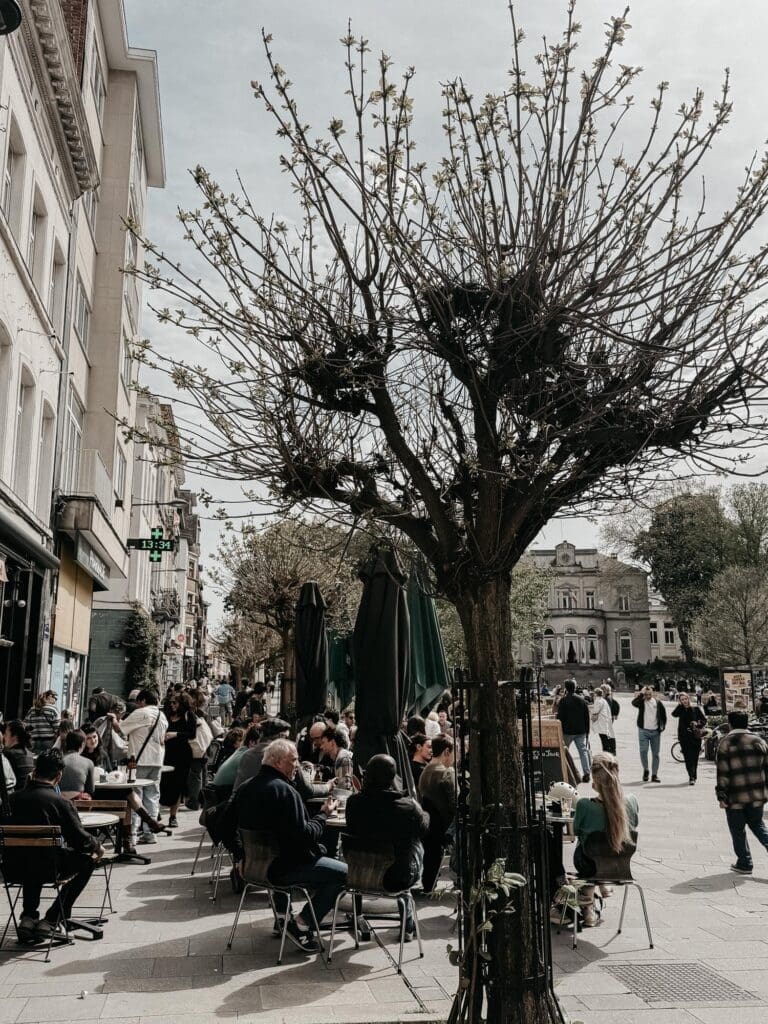
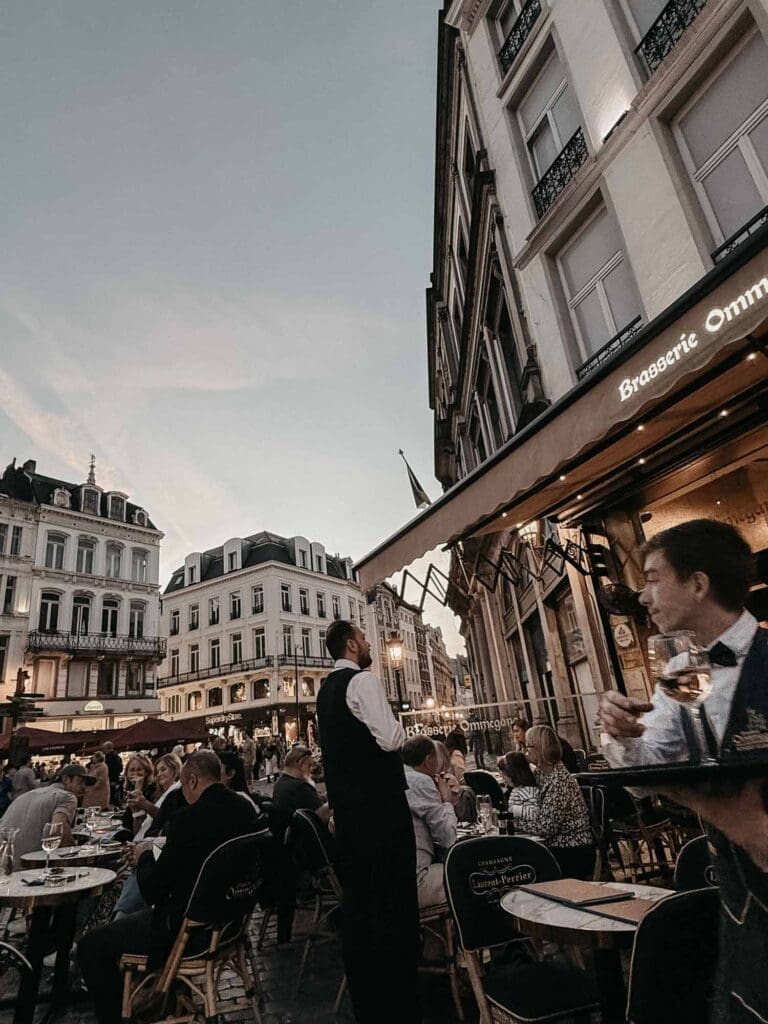
Maybe not so surprising considering its French heritage, yet something I really loved about Brussels was the local café culture. As someone who has spent a lot of time in London where big chains dominate and it is almost impossible to get a seat in the smaller, independent ones, it was so refreshing to discover that in Brussels, it works the other way around – independent cafés dominate and they are all so cute, inviting and often rather spacious, so finding an available seat was never an issue.
I loved how people would linger over coffee, read books, work on their laptops, meet friends or simply sit and watch the world go by, without the sense of urgency or turnover pressure you often find in busier cities. Here, cafés seem to function as true social ‘living rooms’ rather than purely quick-stop coffee counters.
Add to that the tradition of generous pastries and cakes displayed beautifully on counters, and you get a city where cafés feel less transactional and more like places genuinely designed to be enjoyed. This more unhurried way of living – which is exactly the philosophy I live and preach, too – gets a big thumbs up from me.
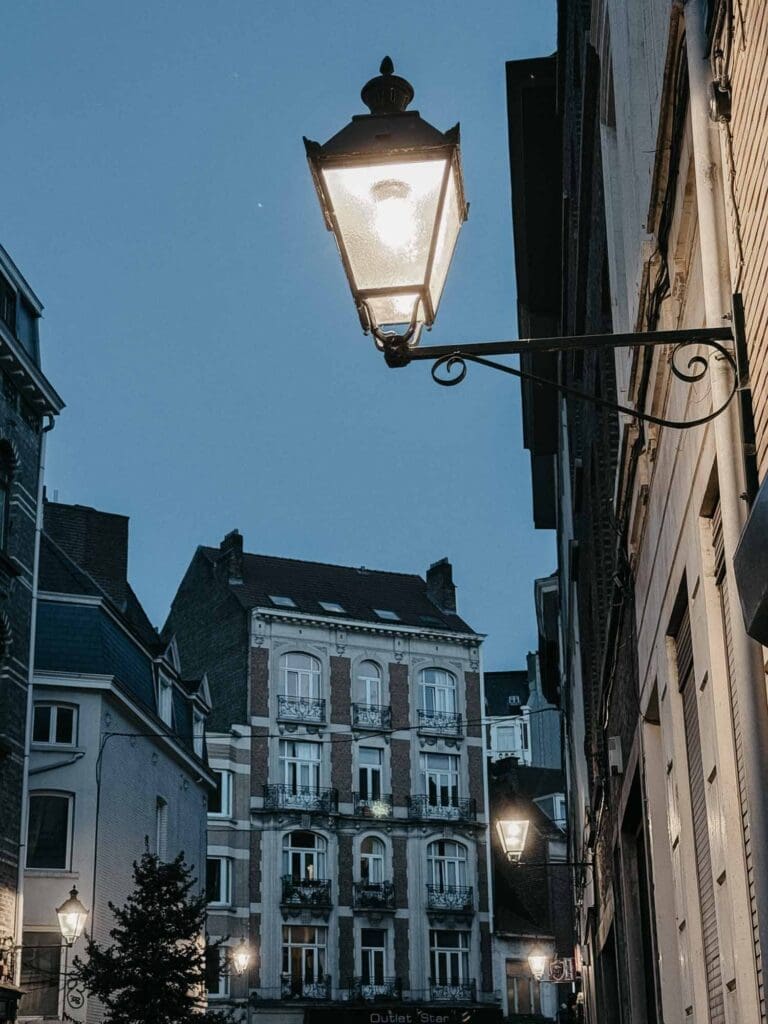
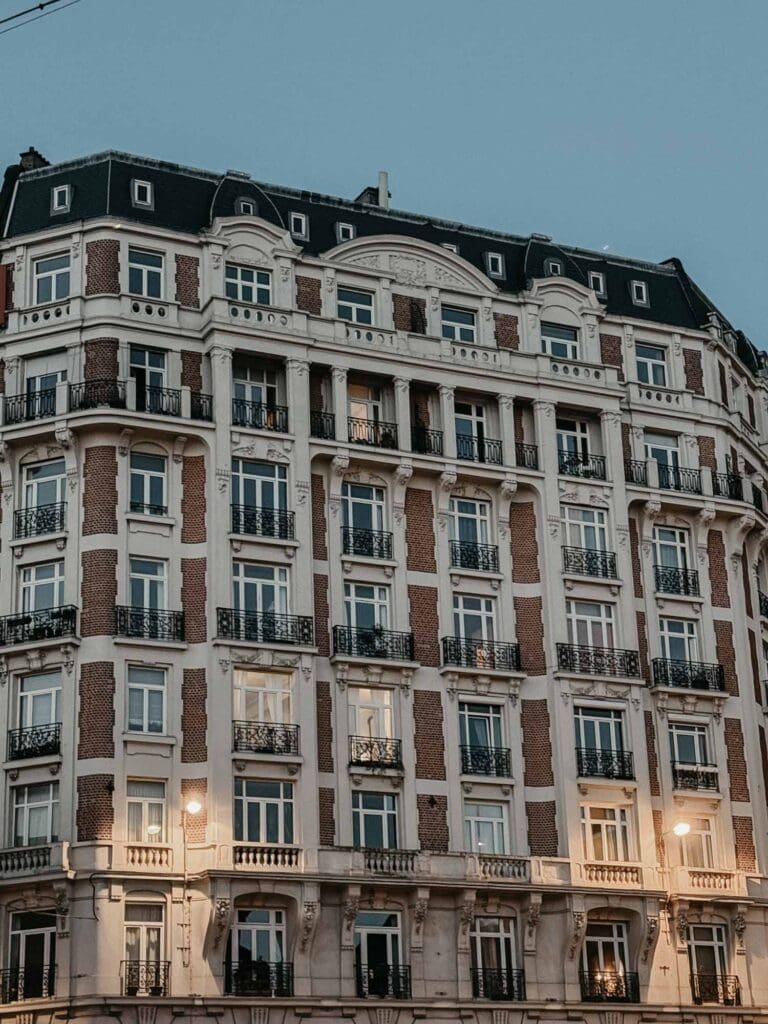
4. Elegant Parisian-inspired architecture
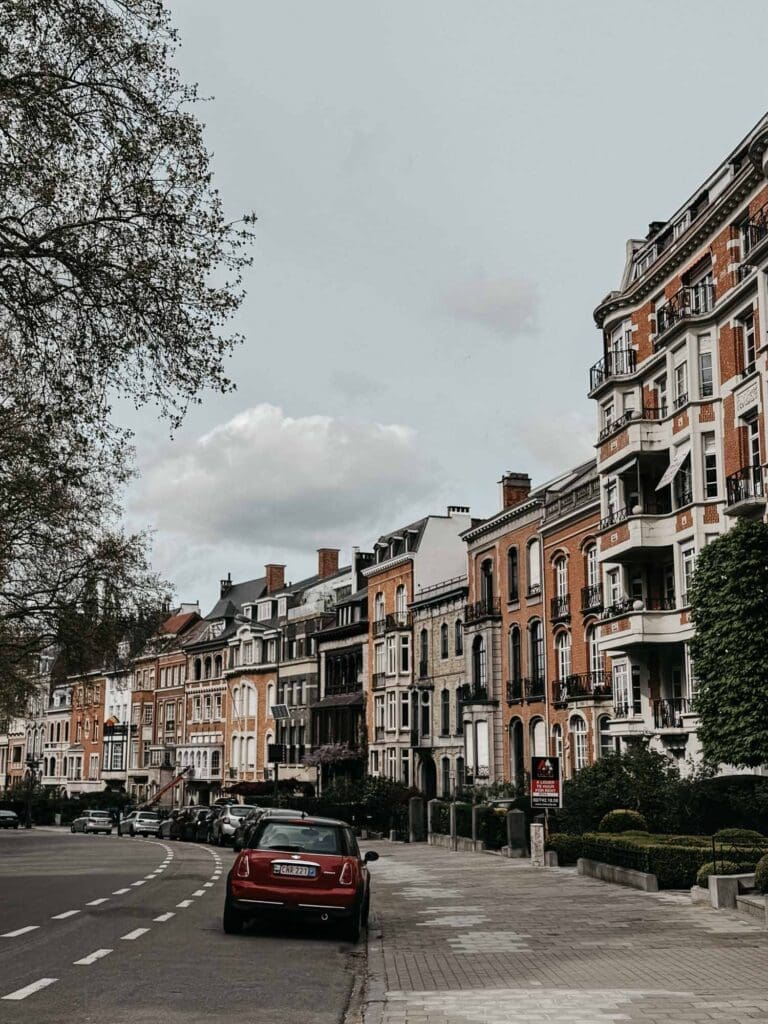
There’s no doubt that Paris is considered one of the prettiest cities in the world. So being able to experience a bit of that Parisian feel in Brussels was an unexpected treat.
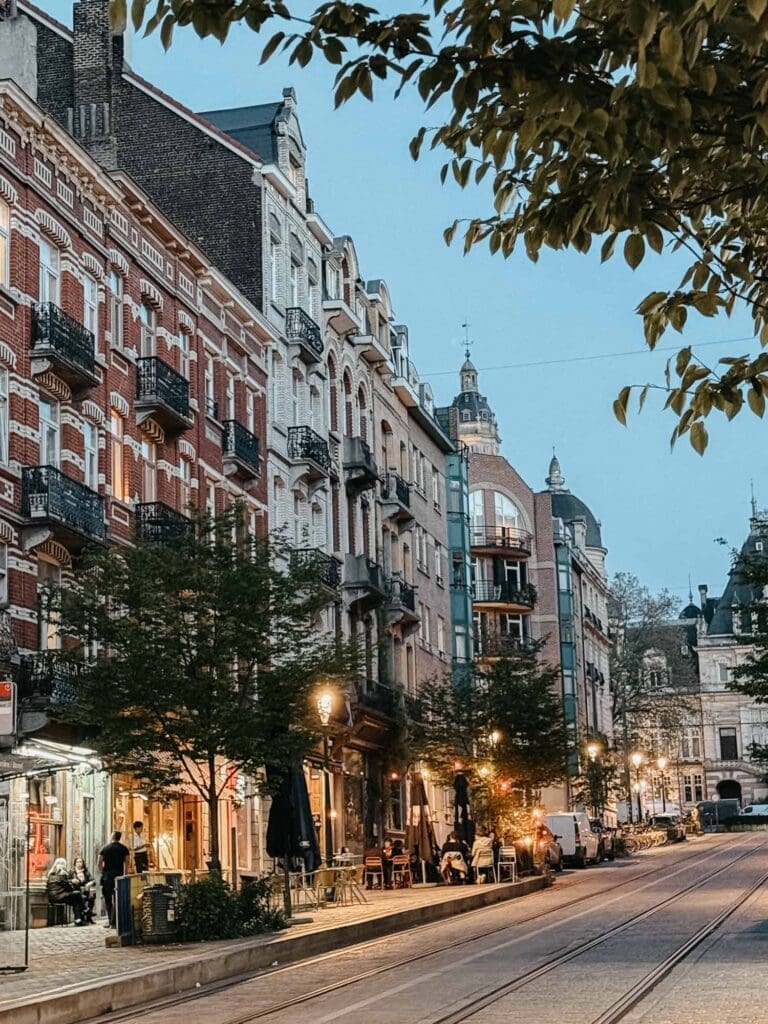
Turns out, Brussels was heavily influenced by the urban planning vision of Georges-Eugène Haussmann, the French prefect who famously redesigned Paris in the mid-19th century. His transformation of Paris introduced wide boulevards, uniform building heights, elegant façades and a sense of order and grandeur that came to define the Parisian city aesthetic.
As Brussels modernised during the same period, it adopted many of these principles, with entire districts designed in a similarly elegant, bourgeois style – especially the symmetrical townhouses, ornate balconies and limestone façades that echo Haussmann’s Paris.
However, Brussels never followed this blueprint as strictly as Paris did, which is why the city often feels more eclectic and layered: Haussmann-inspired elegance appears alongside Art Nouveau masterpieces and more idiosyncratic local architecture, creating a fascinating visual mix rather than a single uniform style.
I absolutely loved walking around and admiring the beautiful townhouses (especially in the Saint-Gilles and Ixelles areas – highly recommend!) in all their elegance, yet in slightly different styles.
5. The Oldmasters Museum
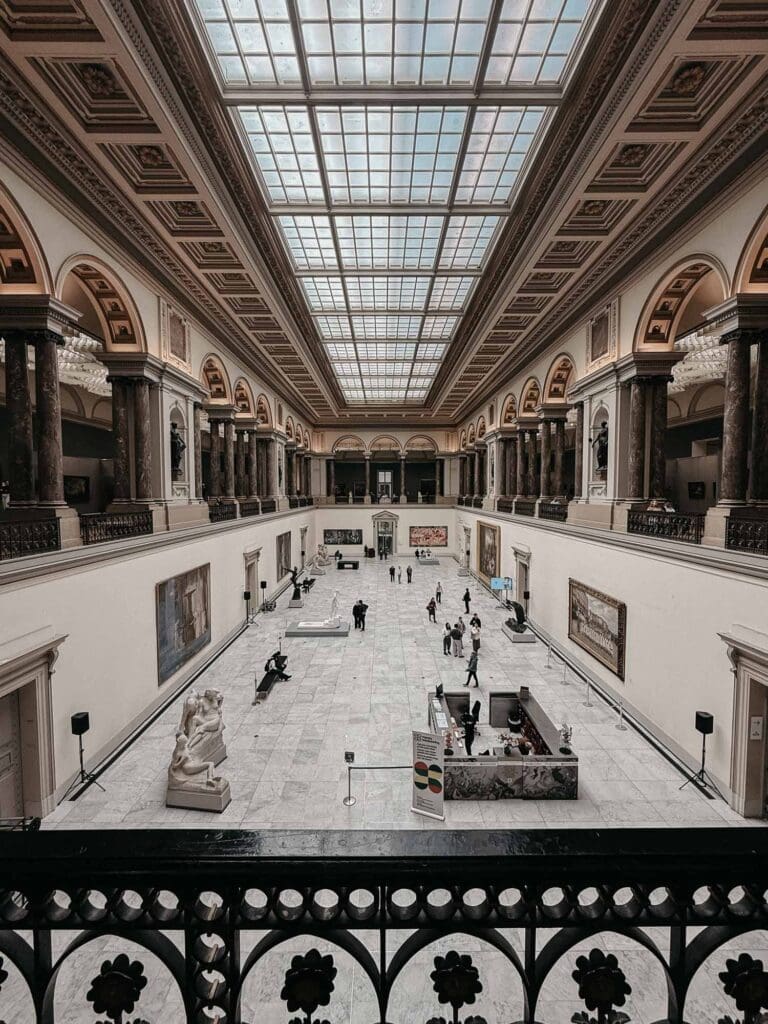
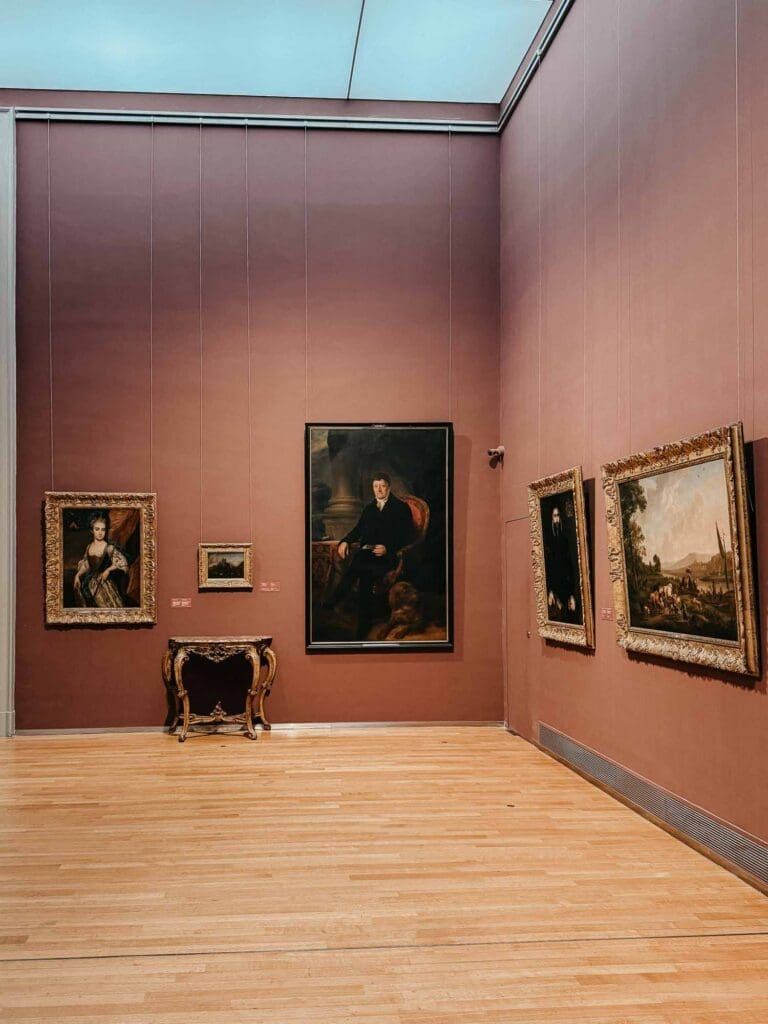
Along with old architecture, I love art museums. Again, I was surprised to find such a standout museum in Brussels – the Oldmasters Museum.
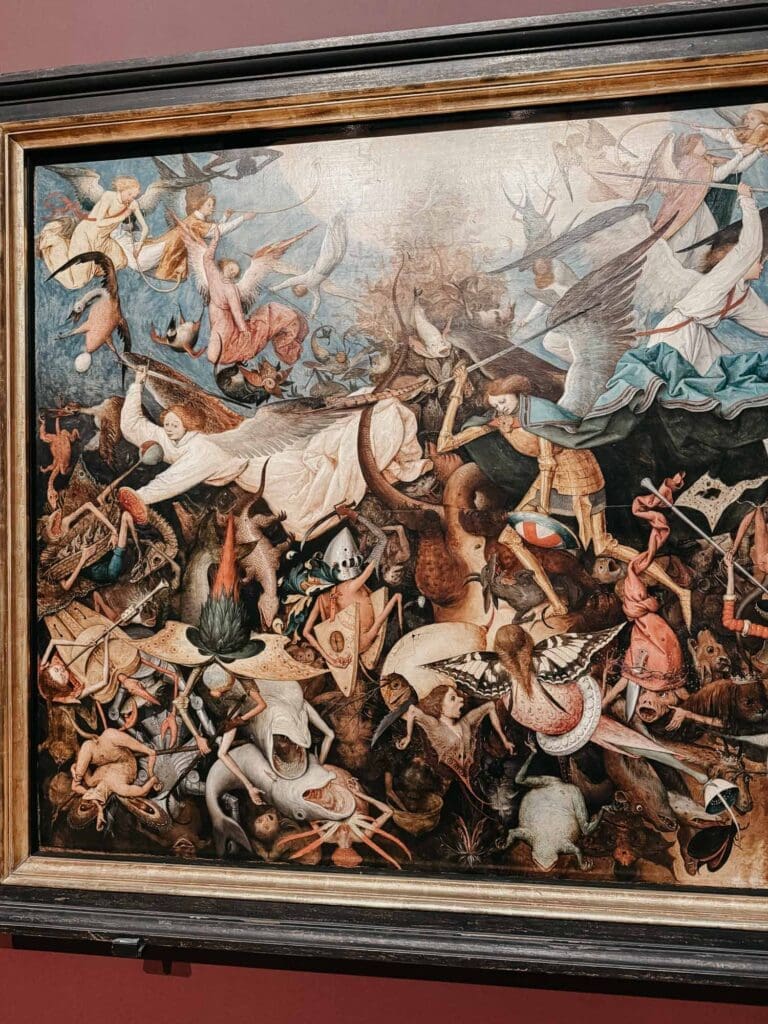
Housed within the elegant complex of the Royal Museums of Fine Arts, with its grand neoclassical interiors, the building itself already sets the tone for what is inside. What made it really interesting to visit was its exceptional collection of Flemish and Netherlandish masters, including works by Rubens, Van Dyck, Bruegel and Bosch, which offer a fascinating glimpse into the artistic heritage of the region. Walking through the galleries feels like moving through layers of history, from religious works from the 1500s to highly detailed everyday scenes and dramatic, symbolic and almost surreal compositions.
While I’m familiar with the works of Rubens and Van Dyck, Bruegel was a completely new discovery and I found his art fascinating. What makes his work so striking is the way he captures entire worlds within a single canvas – often chaotic, densely populated scenes filled with hundreds of tiny figures, everyday life details and layered symbolism. At first glance, his paintings can feel almost overwhelming, but the longer you look, the more you notice small storylines unfolding everywhere, from humorous street scenes to darker moral or religious narratives.
I went approximately 1.5 hours before closing time and it was definitely not enough time to properly explore the entire museum. But I still managed to get a decent overview and feel for the art on display, so I’m excited to go back next time and dive deeper into this fantastic museum.
6. The Magritte Museum
Housed in the same building as the Oldmasters Museum was another memorable art experience waiting to be discovered – the Magritte Museum.
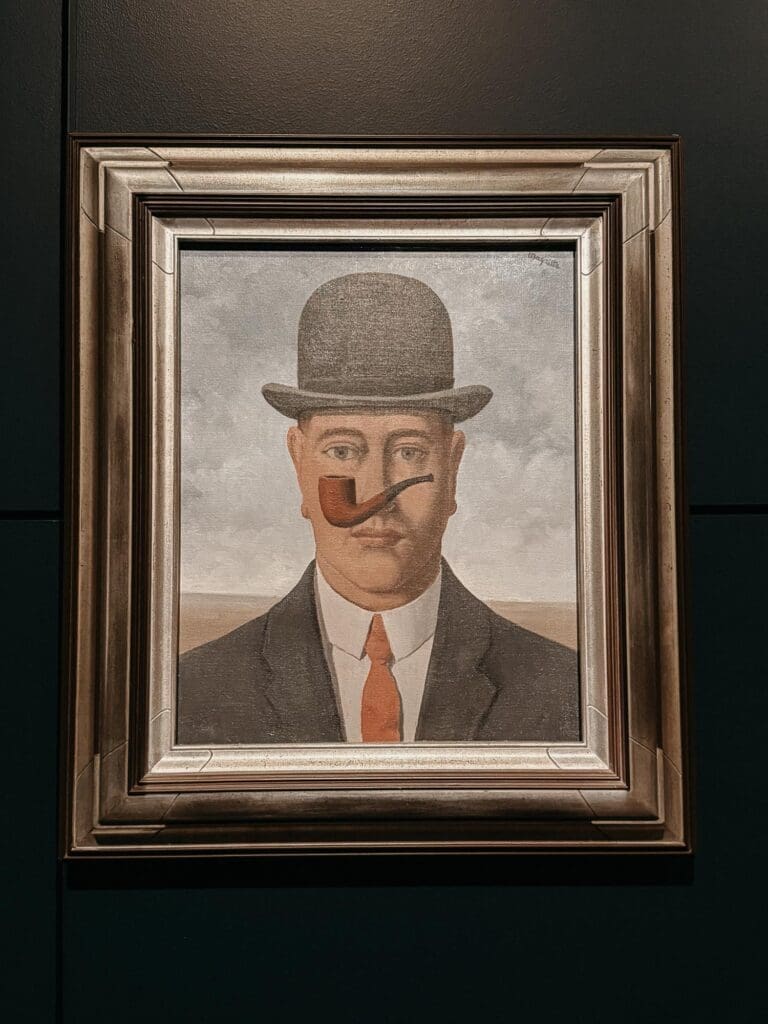
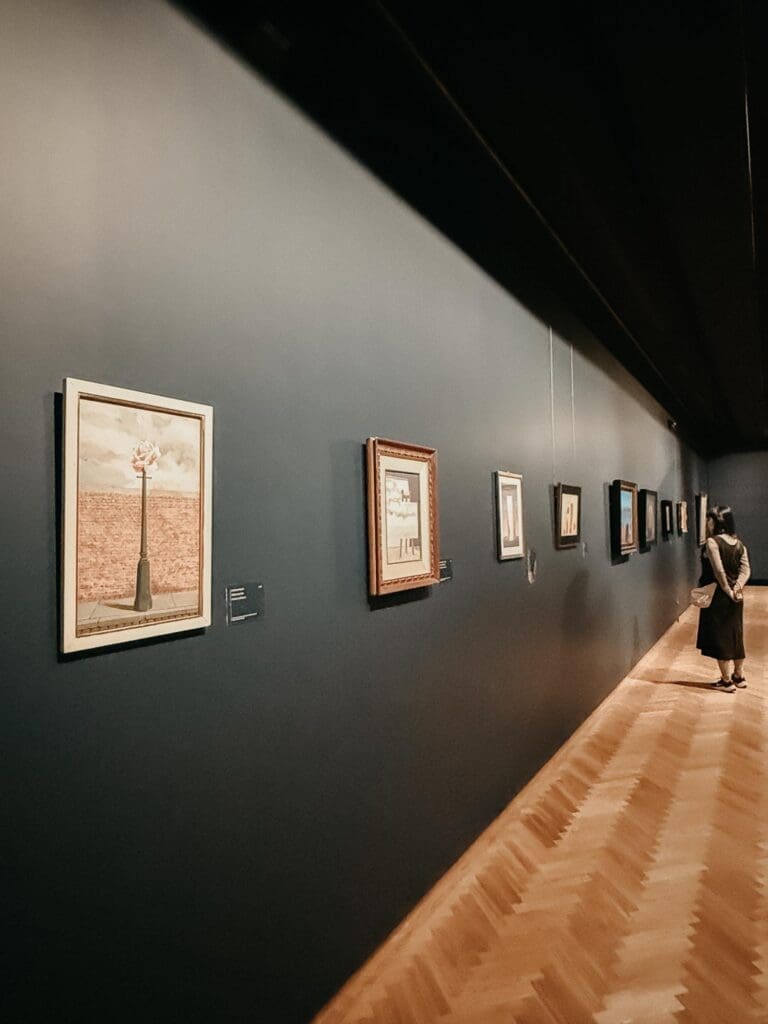
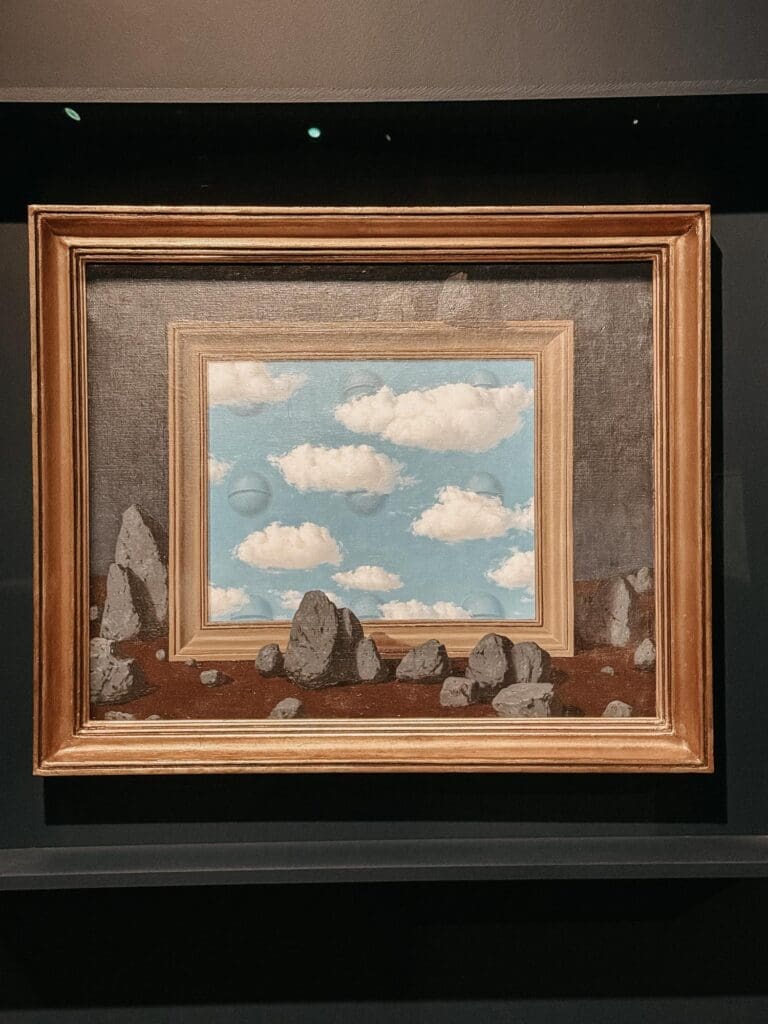
Dedicated to the surrealist works of René Magritte, the collection offers a completely different experience to the classical works in the other wing. Whereas the Oldmasters feel layered in history and symbolism, Magritte’s work is playful, unexpected and often surprisingly lighthearted, inviting you to question what you are actually seeing rather than simply observe it. Ordinary objects are placed in strange, dreamlike contexts, creating a sense of curiosity and quiet humour that makes the experience very easy to engage with, even without any background knowledge of surrealism.
Magritte was also a completely new discovery for me, and I really enjoyed the exhibition, which felt fun and accessible, yet still thought-provoking – a refreshing contrast to the more traditional and intense works in the Oldmasters Museum.
7. Park Cinquantenaire
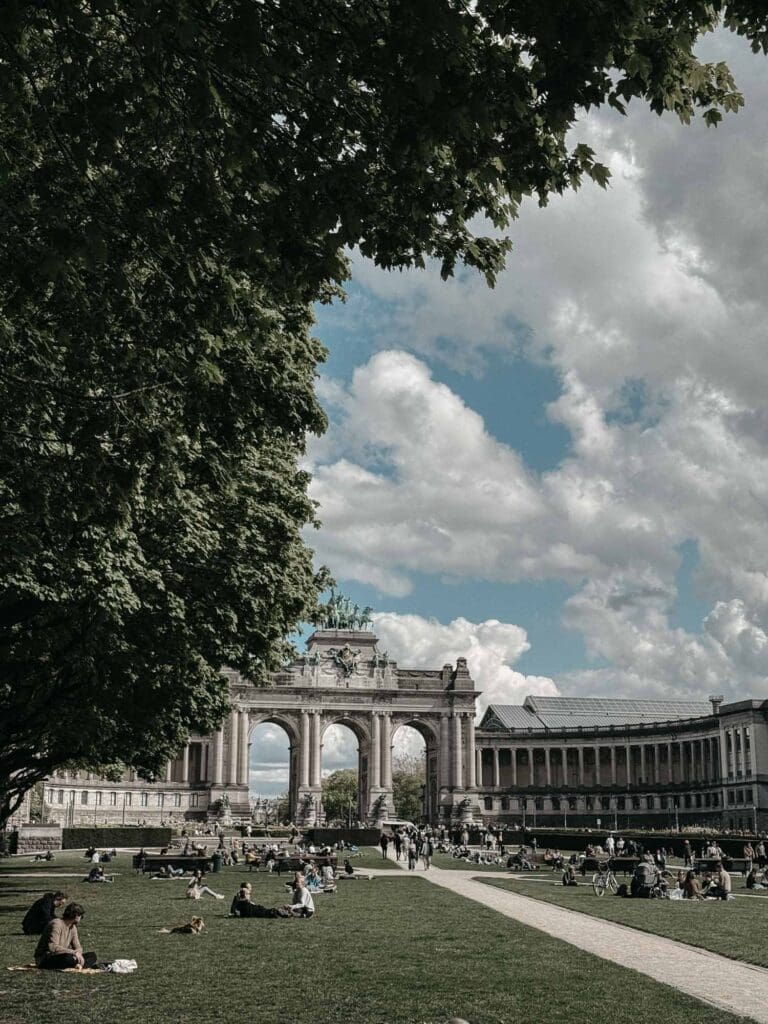
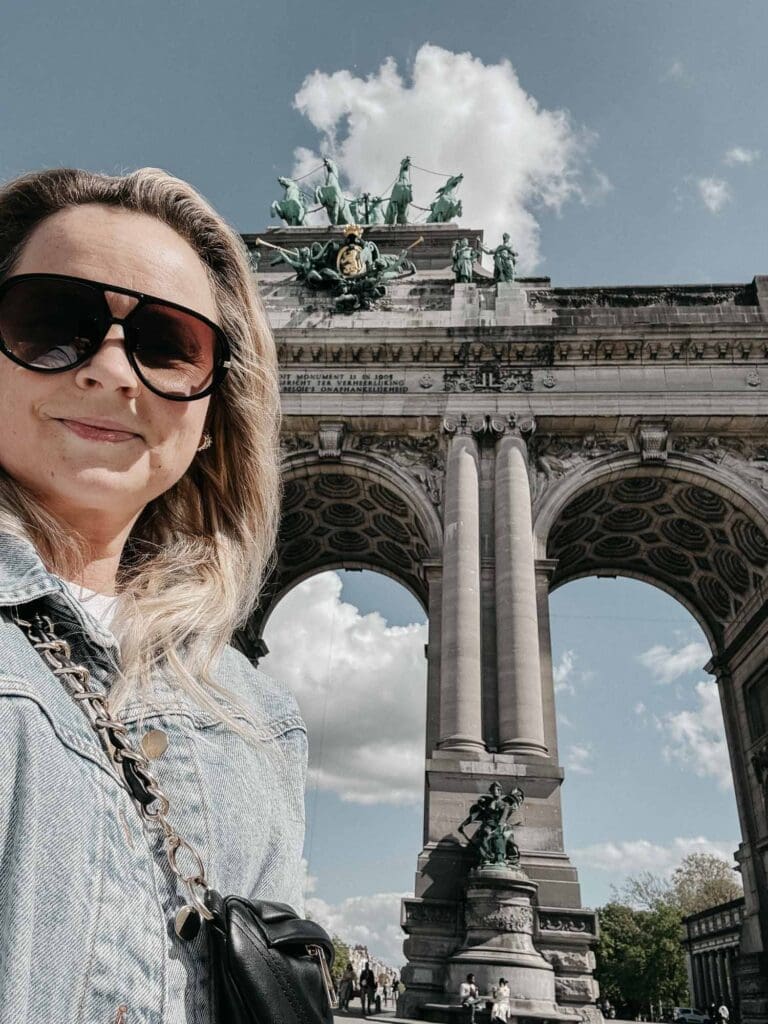
Whether you pay a visit to the European Quarter or not, an absolute must-see is the Park Cinquantenaire nearby. This was another complete surprise discovery – the majestic triumphal arch (resembling the one in Paris) stopped me in my tracks the moment I saw it from a distance.
The park was commissioned for the 1880 national exhibition marking 50 years of Belgian independence (but construction continued well past that, and the arch wasn’t completed until 1905), designed as a grand, symbolic space to celebrate the young nation’s industrial progress and ambition.
Its wide, symmetrical layout and monumental architecture give it a very formal yet beautiful sense of order, almost like an open-air stage for the city’s history and identity. It all really looks very impressive.
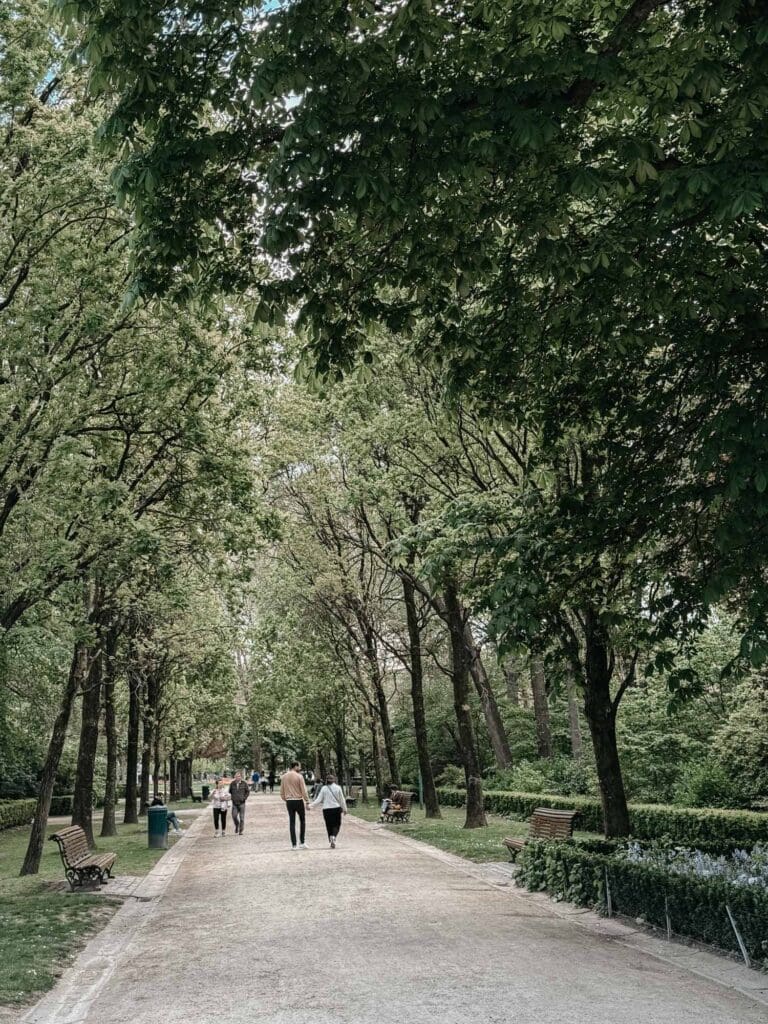
On sunny days – as was the case when I visited – the park becomes a popular gathering spot for locals, with people picnicking on the grass, reading under the trees, or simply relaxing on benches. I would totally go there all the time if I was living nearby. It’s easy to see why it’s loved by locals and visitors alike.
8. International vibe
Partly because of its mixed cultural heritage, partly because it’s the European ‘headquarters’ (home to many of the European Union institutions), and partly because the city attracts expats due to its liveability, Brussels felt very international. Of course, these days every major European city is multicultural, but what surprised me more was just how commonplace the use of English is. Not just within tourist-adjacent industries, but throughout everyday life in general.
As mentioned earlier, Belgium itself is split between Dutch-speaking Flanders and French-speaking Wallonia, while Brussels officially operates bilingually and hosts a huge international community. As a result, English often becomes a practical common language, particularly among younger people, internationals and mixed social groups.
Sitting in cafés, I heard English constantly. And as someone who doesn’t speak either French or Dutch, this made me feel much less like a ‘foreigner’ than I would in many other European cities.
9. A walkable city
I’m obsessed with long city walks. This, in my opinion, is the best way to discover a place. Not only do you get to see a lot and go at your own pace, but you can really soak in the atmosphere, too – the sounds, the smells, the architecture, the neighborhood vibe, the urban landscape.
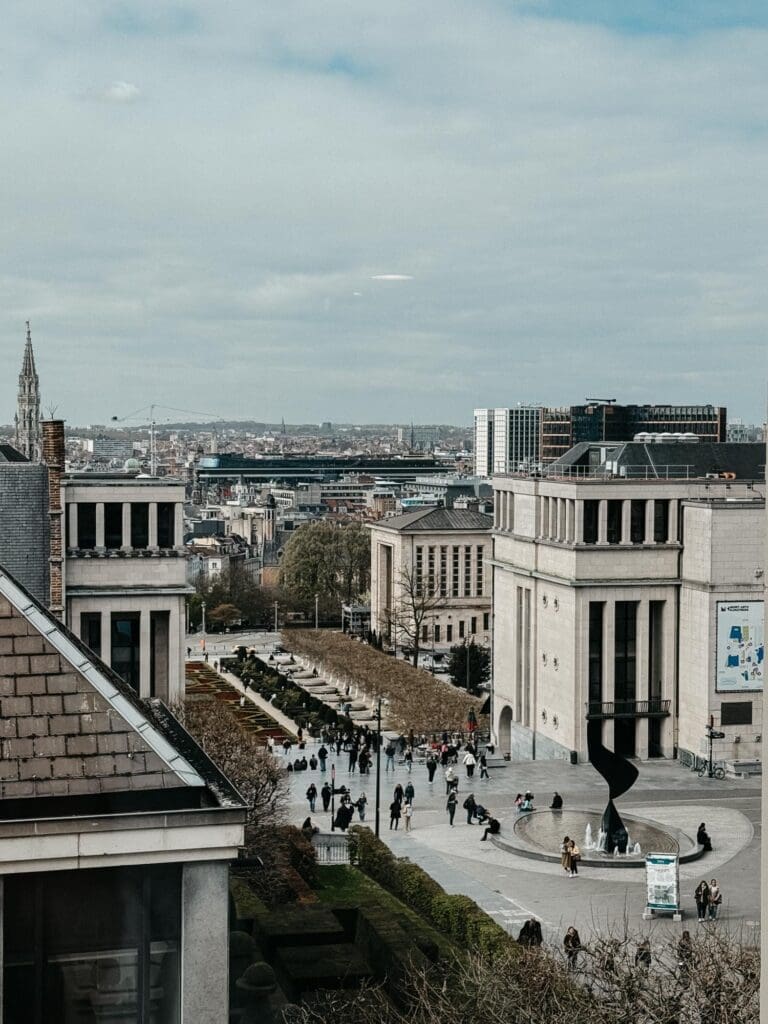
Therefore, it delighted me to discover that Brussels is a very walkable city. With a population of around 1.2 million, the city is big enough to have plenty on offer, yet intimate enough that you can get to almost anywhere on foot if you so prefer to.
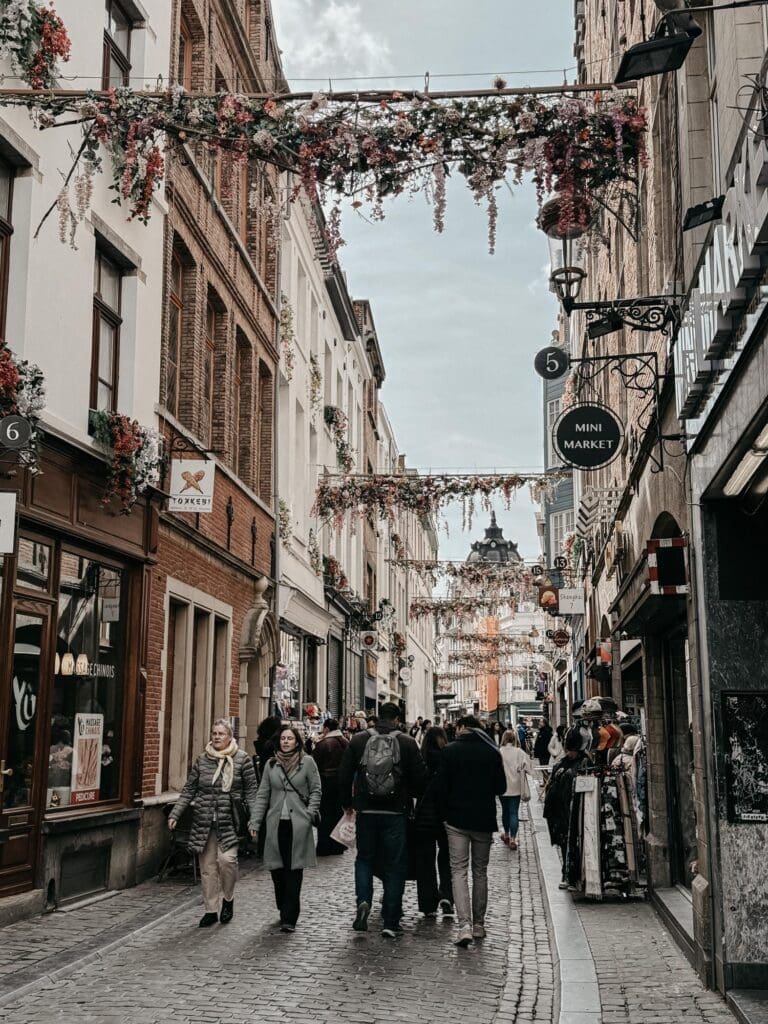
What made Brussels particularly enjoyable to explore on foot was also how varied the city felt from one neighborhood to another. Walking through the city, you move quite seamlessly between grand Parisian-inspired boulevards, elegant Art Nouveau streets, lively multicultural areas, quiet residential pockets and café-filled squares, which constantly gives you something new to observe. Rather than feeling overly polished or uniform, Brussels reveals itself gradually through wandering, which made the exploring endlessly interesting.
While a bit hilly, the city centre is fairly compact, and walking between Saint-Gilles or Ixelles (where I was staying) and the city centre took only around half an hour. The city felt intimate and a lot quieter compared to London (which of course is a rather extreme place when it comes to crowds), yet big and varied enough for it to feel interesting.
All in all, the city felt relaxed, friendly, and very liveable as I already mentioned earlier.
10. Etangs d’Ixelles (a pretty park with a pond)
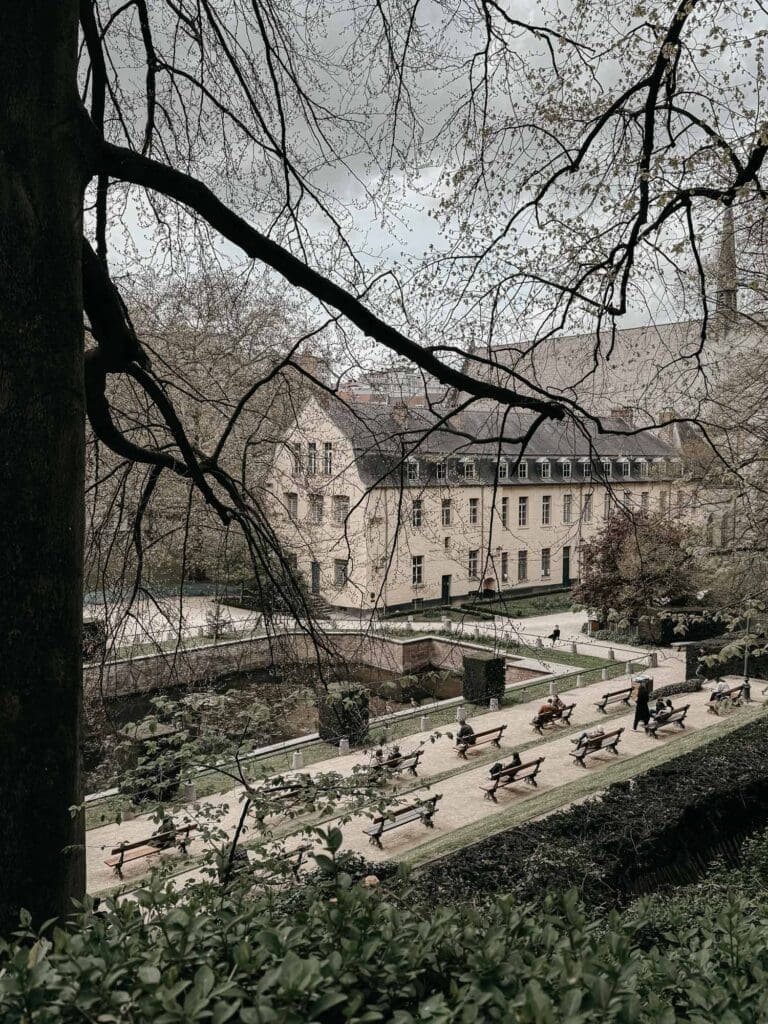
This was a delightful little discovery not far from where I was staying. A peaceful slice of nature in one of the most elegant parts of the city. Perfect for a weekend stroll, I went on a Sunday and found this park to be very charming.
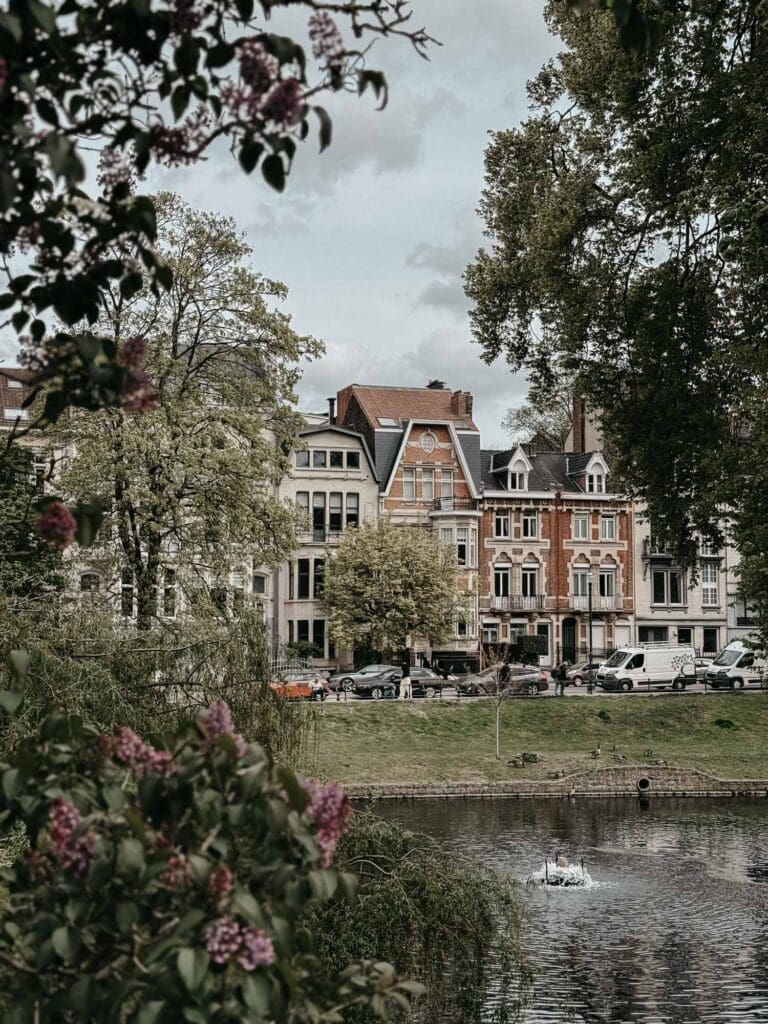
The pond, in the centre of the park, is beautifully framed by tree-lined paths, creating a tranquil atmosphere. The entire park feels very well-kept and peaceful, with a quieter seating area tucked away at the far end, perfect for basking in the sunshine or resting your feet.
What I especially loved, however, were the rows of elegant townhouses surrounding the park – grand façades with ornate detailing and beautiful proportions, some of which almost resemble small urban castles, clearly once (and still) home to some of the city’s more affluent residents. It’s very obvious why the nearby streets are some of the most expensive in Brussels. The combination of pretty, historic architecture and a peaceful park offers a very tranquil way of life.
11. Chocolate as a work of art
Personally, chocolate does not particularly excite me. Every once in a while I might eat some, but I’m much more of a pastry kind of gal. However, in Brussels I found myself genuinely noticing chocolate in a completely different way.
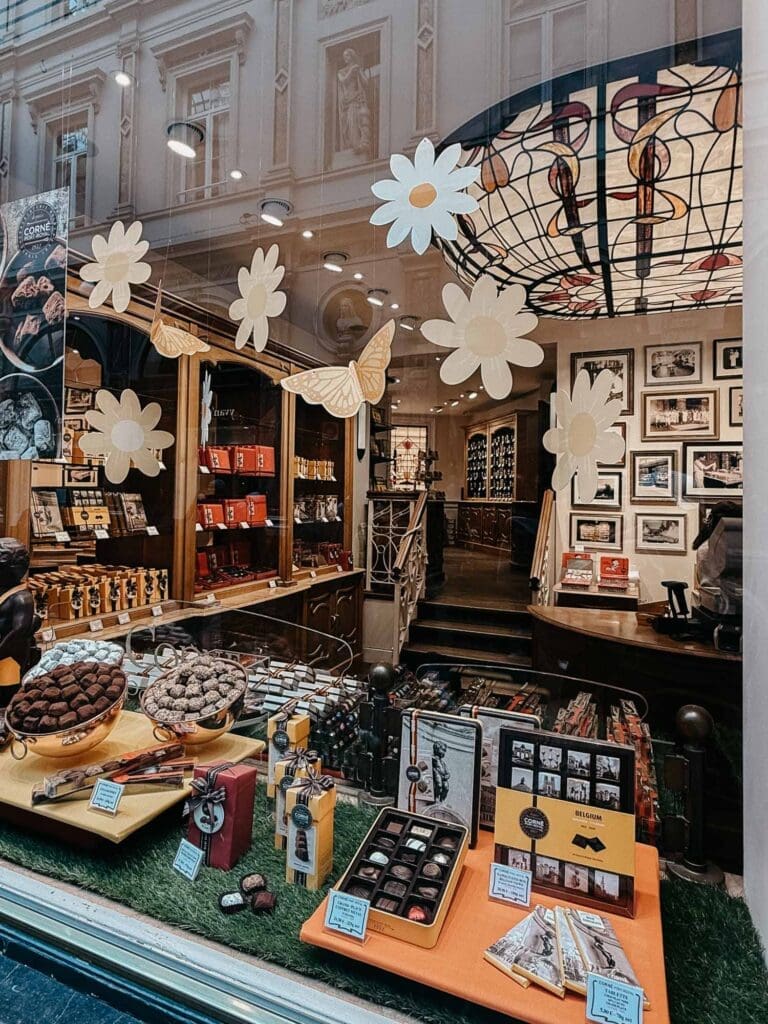
Most people know that Belgium has a long-standing reputation for chocolate craftsmanship. This tradition dates back to the 19th century, when cocoa processing techniques became more refined and chocolatiers began elevating chocolate from a simple commodity into something far more artisanal. Over time, Brussels in particular became home to many independent chocolatiers who focused not on mass production, but on precision, quality and presentation.
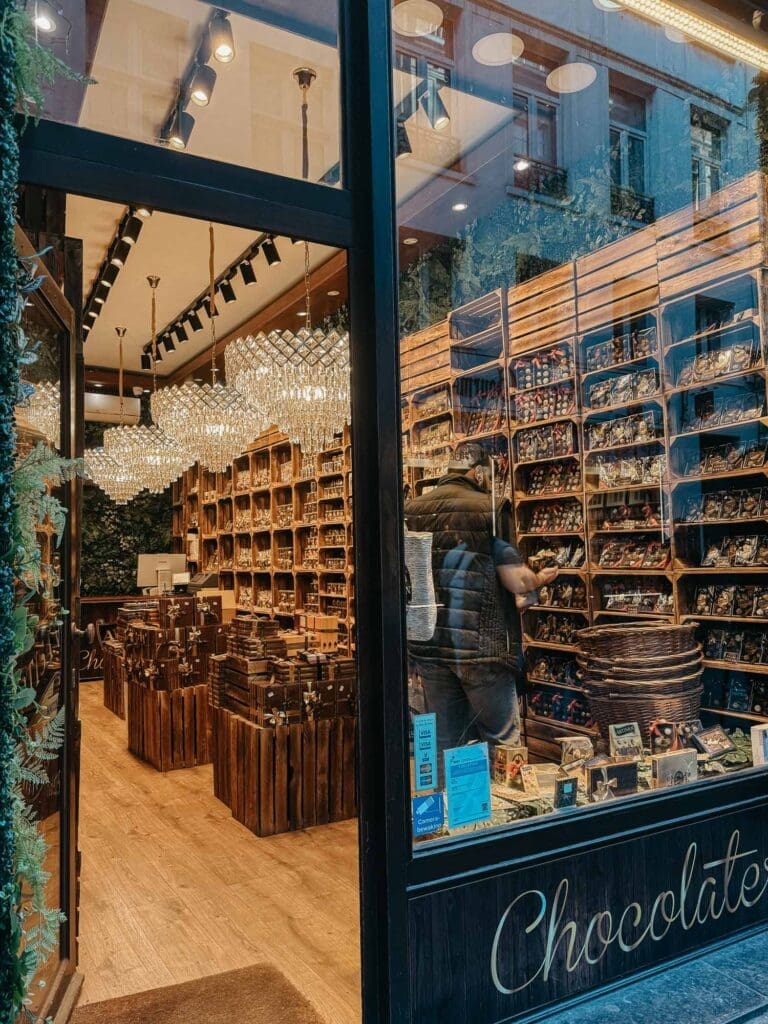
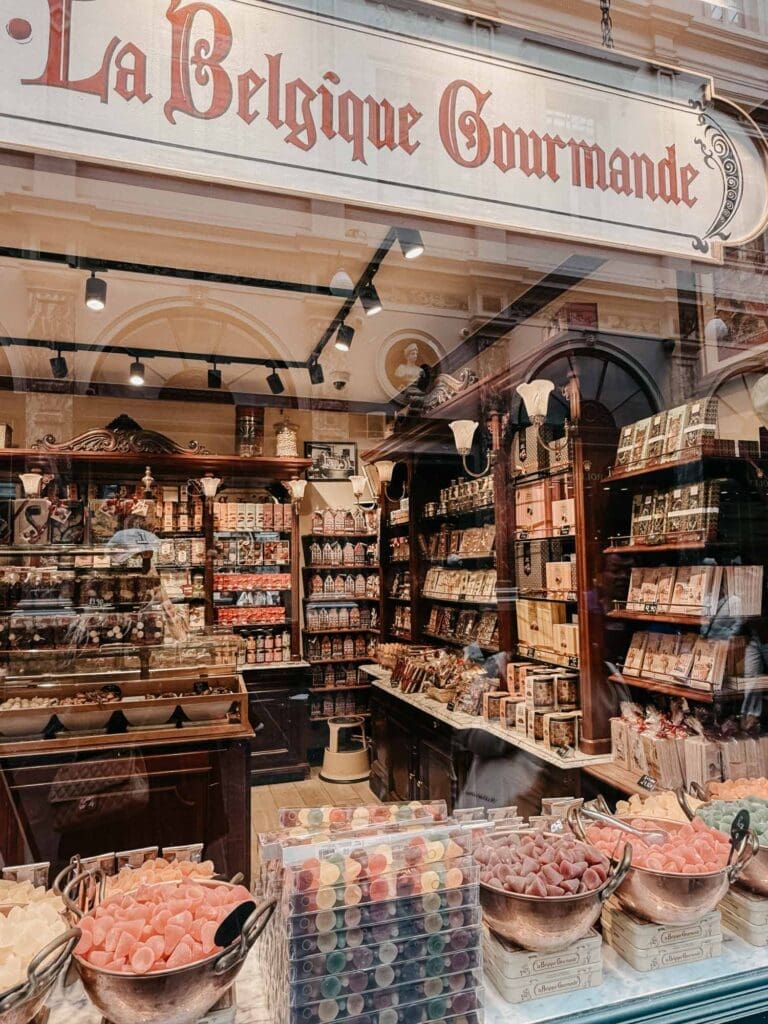
What stood out to me most was how much chocolate here feels like a luxury object rather than just a sweet treat. The chocolate shops are often beautifully designed boutiques, the displays feel almost like jewellery shops, and each piece is treated with a level of care and detail that borders on artistic. The packaging alone often feels like part of the experience – minimal, very elegant, and thoughtfully designed in a way that shows attention being paid to every little detail.
As a creative, a branding specialist and a serious aesthete, this level of intentionality and effort really impressed me. Even though I wasn’t particularly drawn to eating the chocolate itself, I found myself appreciating the entire sensory and visual experience around it – the precision, the presentation, and the sense that what is being sold is not just chocolate, but a carefully curated piece of expert craftsmanship.
12. A slower pace of life
Beyond the cafés themselves (see bullet 4), what I really appreciated about Brussels was the city’s overall slower rhythm. It felt like in Belgium in general, people focus more on enjoyment (be it food, lifestyle or time management) and less on constant optimisation and performative productivity. This, again, mirrors my own life philosophy and therefore felt very aligned.
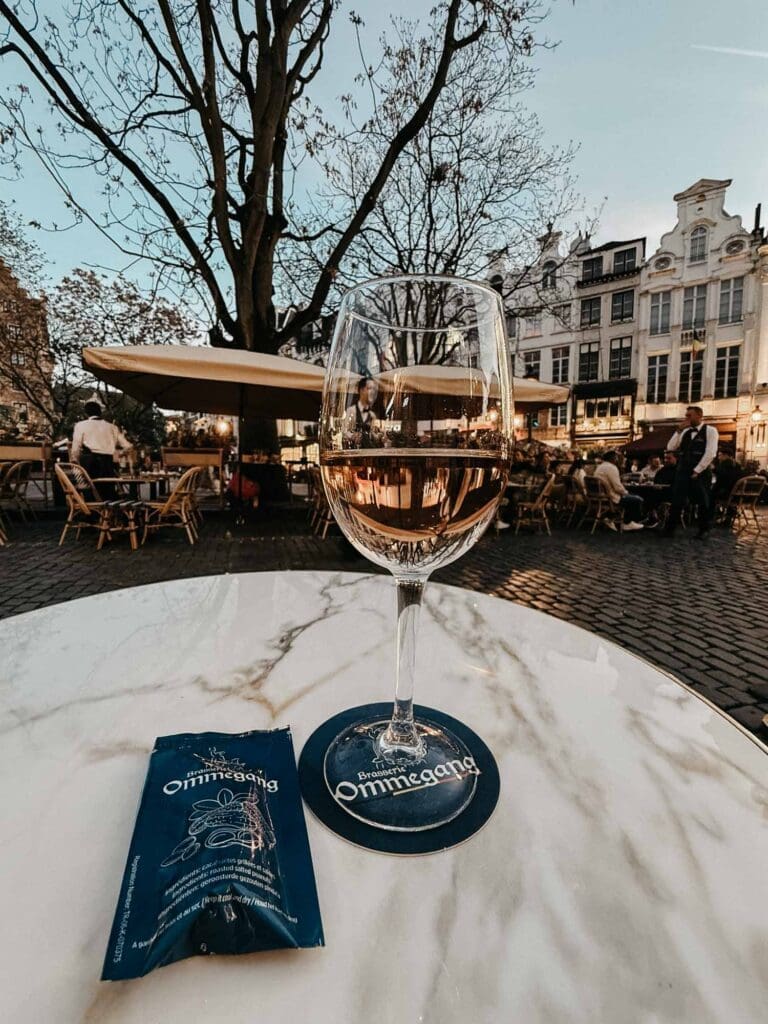
The French cultural influence likely plays a role in this, too. Sitting on a terrace with a coffee or a glass of (delightful French) wine in the middle of the day doesn’t feel like a ‘treat’ or a break from real life, but simply part of the rhythm of the day itself.
More than anything, what stood out to me was how natural this ease felt within an otherwise major European capital. Brussels manages to feel both cosmopolitan and unhurried at the same time – a combination that creates a very liveable, grounded atmosphere. On one hand, you are surrounded by culture, history and international energy… and on the other, it still feels like there is space to slow down, take your time, and actually enjoy your life. Exactly how it should be.
– – – – –
So there you have it. In a city that some call ‘boring’, I found at least a dozen things to appreciate. Brussels was truly one of those wildcard experiences – where you don’t not know what to expect, but end up being incredibly positively surprised.
I would 100% visit again. And next time, I also hope to make it to Antwerp and Bruges in the Dutch-speaking north, just a short train ride away – both of which are apparently very much worth a visit too.
Merci, Bruxelles. À la prochaine!
—-
YOU MIGHT ALSO BE INTERESTED IN:
>> Beyond fashion: lessons in intentional living from Milan
>> How 3 weeks in Nice turned into an unexpected love affair
>> Beauty & brutality: what a week in York reminded me about being human
Leave a Reply


